Sleep Environment · Buying Guide
Choosing an Organic Mattress: Materials, Certifications, and Fit
“Organic” can be a useful clue, but it is not a complete description of a mattress. The label may refer to one material, a particular layer, or a finished product—and it says little by itself about comfort, support, durability, or whether the bed suits your frame. A careful choice begins with the materials list, continues with a close look at certifications, and ends with the most personal test of all: how the mattress fits your body and your bedroom.
Published October 31, 2026
Start with the layers, not the headline
Mattress shopping often begins with a promise: natural, clean, green, sustainable, or organic. Such language can point toward worthwhile differences, but broad claims are not a materials specification. Two mattresses described as organic may use very different combinations of latex, cotton, wool, steel, adhesives, and fabrics. One may have certified organic fibers in its cover and little else; another may provide documentation for multiple materials and explain how the components are assembled.
Think of a mattress as a layered system. The cover is the surface you touch. Beneath it may be a comfort layer that cushions pressure points, a transition layer that changes how the bed responds, and a support core that holds the body. In a hybrid design, that core may include steel coils. Each layer affects feel and performance, and each can have a different material history and certification status.
Ask for a layer-by-layer description. Look for the material name, its location, and—where available—its proportion or thickness. “Natural latex,” for instance, is not automatically the same as certified organic latex. Cotton in the cover does not establish the status of the foam or the whole mattress. A transparent maker should be able to distinguish the cover textile from the filling and the support core rather than letting one desirable ingredient stand for the entire construction.
This is where the word organic requires care. It describes a production standard for particular agricultural materials, not a universal guarantee that a finished bed is chemical-free, risk-free, or environmentally superior in every respect. The useful question is not simply whether a mattress is organic, but what is organic, how that claim is verified, and what else is in the product.
Know the materials commonly used
Latex: buoyant, responsive support
Latex foam is made from rubber-tree sap, though the final material is processed and its composition depends on the manufacturing method. Some mattresses use natural latex; others use blends that may include synthetic latex. The terms “Dunlop” and “Talalay” refer to different manufacturing processes, not certifications or grades of organic status. Their feel can vary, and the result also depends on formulation, firmness, and layer thickness.
For an organic mattress, check whether the latex itself is certified and which component of the product the certificate covers. Ask whether the mattress contains blended latex, synthetic latex, or other foams. Latex can feel springy and supportive, but no material is comfortable for everyone. A person who prefers a deeply cushioned, slow-response surface may experience it differently from someone who likes a more buoyant feel.
Cotton: a familiar textile with a specific role
Cotton may appear in the outer cover, a quilted panel, or an interior batting layer. It can contribute softness and help manage moisture near the surface, but the word “cotton” alone does not disclose how it was grown or processed. If organic cotton is important to your decision, verify that the relevant textile or product has appropriate documentation, and note whether the claim concerns the fabric, the fiber, or a larger certified assembly.
Wool: cushioning and temperature management
Wool is often used as batting beneath the cover. Its structure can help create a cushioned surface and can interact with moisture and heat in ways that some sleepers find comfortable. Ask how much wool is used, where it sits, how it is processed, and whether it is certified if that matters to you. People with wool sensitivity or a strong preference for vegan materials may want to consider other constructions.
Coils, adhesives, and less visible components
A mattress can contain mostly natural fibers and still include steel coils, flame barriers, adhesives, or other materials that are not organic. That does not automatically make it a poor choice. It does mean a materials description should cover the whole construction, not just the components most likely to appear in a headline. Find out how the mattress meets applicable fire-safety requirements and whether the maker can describe any barriers, bonding agents, or added treatments.
Certifications can help answer some questions, but they are not a substitute for ingredient disclosure. If a brand does not explain what is inside a mattress, a badge on a product page cannot fill every gap.
Read certifications as carefully as claims
Third-party certifications can make comparisons more meaningful by setting defined criteria and requiring verification. Their scope matters. A certificate may apply to a raw material, a textile, a component, or a finished product. It may address organic content, chemical testing, emissions, or a combination of requirements. Those are related but distinct questions, and no single mark answers all of them.
| Certification or program | What it can help assess | What to verify |
|---|---|---|
| GOTS | Organic-fiber content and processing requirements for textiles within the standard’s scope. | Whether the specific textile or product is certified, and which version and label grade apply. |
| GOLS | Organic content and processing requirements for latex products within the standard’s scope. | Whether the latex component or finished latex product is covered by a current certificate. |
| OEKO-TEX Standard 100 | Testing of textile products and components for specified harmful substances. | The certified article, product class, and certificate validity; it is not an organic certification. |
| GREENGUARD Gold | Limits for certain chemical emissions from certified products in indoor environments. | Whether the mattress model—not merely a material or related product—is listed as certified. |
| CertiPUR-US | Standards for certain flexible polyurethane foams, including specified content and emissions criteria. | Whether the foam used is certified; this program does not certify the mattress as organic. |
GOTS, the Global Organic Textile Standard, concerns textiles and their processing under defined requirements. It may be relevant to cotton or other textile components, but a shopper should not assume that certification of a cover means every mattress layer is certified. GOLS, the Global Organic Latex Standard, is relevant to organic latex content and processing. Again, confirm which product or component appears on the certificate.
Other marks answer different questions. OEKO-TEX Standard 100 is a testing program for specified harmful substances in textiles and components; it does not mean that the item is organic. GREENGUARD Gold focuses on chemical emissions and indoor air quality criteria for certified products. CertiPUR-US applies to certain flexible polyurethane foams and is not an organic label. These programs may provide useful information, but they should be interpreted according to their stated scope.
When a brand uses a certification mark, look for the certifying organization’s name, the certificate or license number where available, the exact model or component covered, and a way to confirm current status. If the product page only says “certified materials” without naming the standard, ask for specifics. A logo without a clear connection to the item in front of you is not enough to establish what has been verified.
Also separate certification from safety, health, and environmental claims. A certification has defined criteria; a broad promise such as “toxin-free” may not. No mattress label should be taken as proof that a product will prevent illness or improve a medical condition. Certifications can help establish how a product was made or tested, but they cannot predict an individual’s experience or replace medical advice.
Match comfort and support to the sleeper
Materials are only part of a mattress decision. The bed must also support the person using it. There is no universally correct firmness, and a rating such as “medium” is not perfectly standardized across manufacturers. Body shape, weight, sleep position, personal preference, and the structure of the mattress all influence how firm it feels.
- Side sleepers often pay close attention to pressure at the shoulders and hips. A surface that is too firm for their body may feel uncomfortable, while a bed that lets the pelvis sink excessively may feel poorly aligned.
- Back sleepers may look for a balance: enough cushioning to feel comfortable, with support that prevents the lower body from settling too far into the mattress.
- Stomach sleepers commonly consider whether the midsection is adequately supported. A surface that is too soft can allow the torso to sink in a way that feels strained to some people.
- Combination sleepers may value ease of movement and a responsive surface, particularly if they change positions during the night.
These are starting points, not rules. If you share a bed, each person’s needs count. A split firmness option, where available, may help, but confirm how the construction works and whether the chosen size is compatible with your frame and bedding. Couples should also consider motion transfer, edge support, and whether the mattress remains comfortable when both sleepers use the surface at once.
When testing a mattress, lie in your usual positions for more than a few seconds. Notice whether you feel pressure, whether turning requires effort, and whether your body feels evenly supported. A brief showroom test cannot perfectly reproduce a full night’s sleep, so understand the home trial period, return conditions, and any fees before buying. Ask whether the trial begins at delivery, whether an adjustment period is expected, and what happens to a returned mattress.
Firmness and support are not interchangeable. Firmness describes the initial feel at the surface; support concerns how the mattress holds the body. A soft-feeling mattress can still offer support, and a very firm mattress may not suit every sleeper. Avoid relying on a single number or marketing phrase when the actual construction and your comfort are more informative.
Check the bed-frame fit before delivery
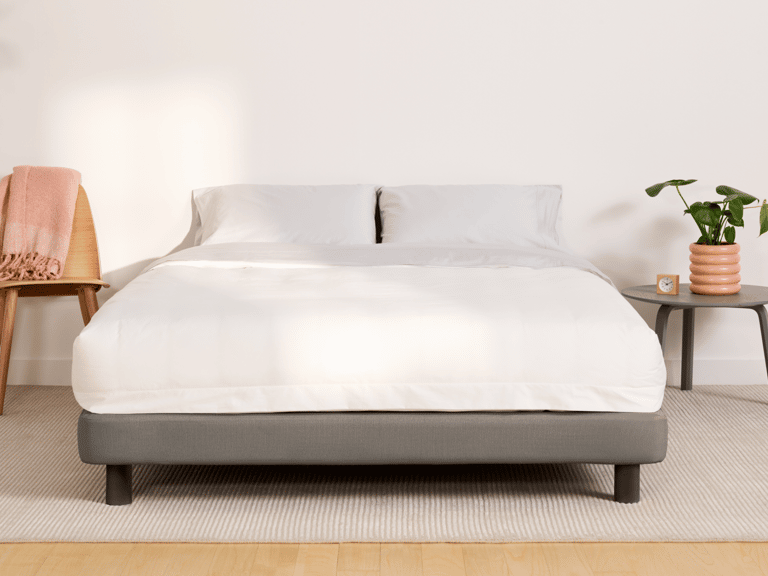
A mattress needs a compatible foundation. Before ordering, measure the existing frame, confirm the mattress size, and read the maker’s requirements for slat spacing, platform surfaces, or adjustable bases. A mattress that is too large, too small, or insufficiently supported can shift, sag, or fail to perform as intended. The frame’s stated size and the mattress maker’s specifications should agree.
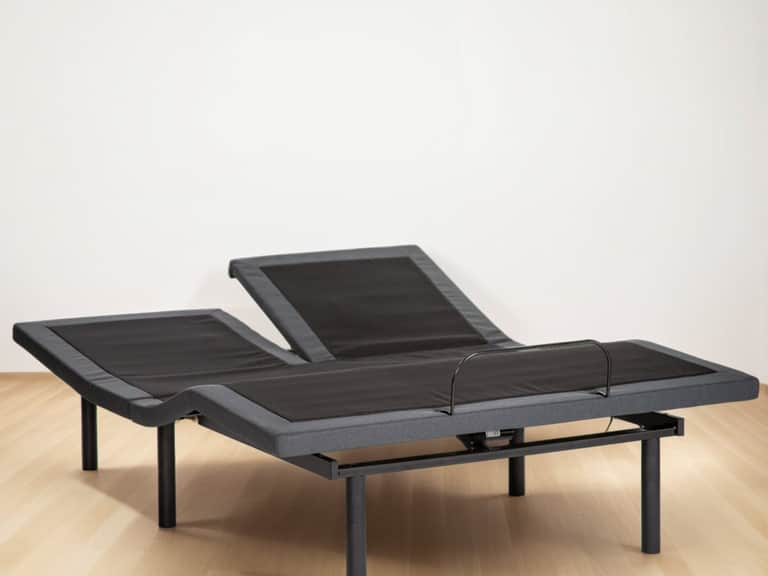
Check the total height of the mattress and foundation together. A taller combination can change how easy it is to get in and out of bed, how fitted sheets sit, and whether a headboard or bedside furniture remains at a comfortable level. If the mattress will sit on an adjustable base, verify that its construction is designed to flex with that base and confirm any restrictions on use.
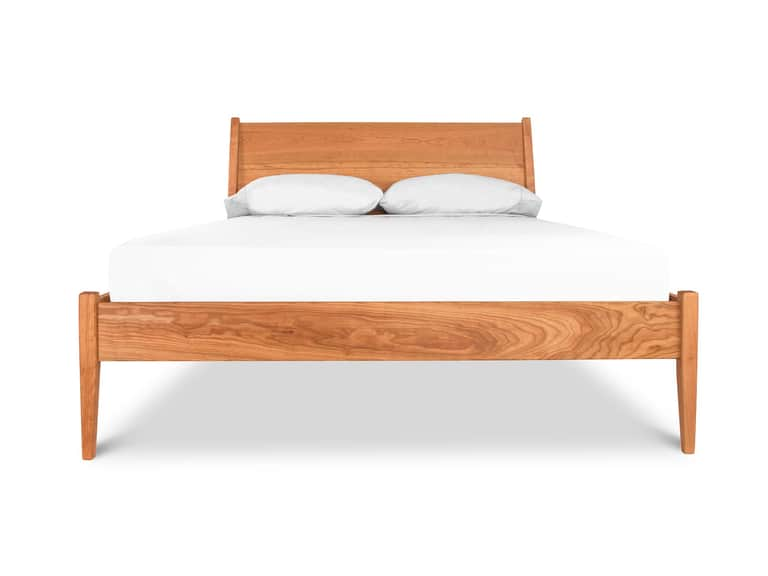
For slatted frames, do not assume that all slat systems are alike. The gap between slats, the strength of the frame, center support, and the manufacturer’s maximum load guidance may matter. A platform design may have different requirements from a traditional box spring. Follow the mattress company’s written instructions rather than relying on a general rule found elsewhere.
Size deserves a practical review, too. A larger bed may improve personal space, but it must fit the room and leave sensible pathways around it. Measure doorways, staircases, and turns along the delivery route. Ask whether the mattress arrives compressed, whether it requires time to expand, and whether the manufacturer gives particular handling or ventilation guidance after unboxing.
Consider care, durability, and the full cost
A mattress is a substantial purchase, so compare more than the initial price. Review the warranty and identify what it covers, what it excludes, and whether a particular foundation is required to keep the coverage valid. A warranty is not the same as a comfort guarantee: it generally concerns defined defects under specified conditions, not whether the bed feels right to you.
Care instructions can reveal whether the mattress suits your household. Some covers are not removable or machine washable. Some models recommend spot cleaning only. Ask how to handle spills, whether a protector is allowed or recommended, and whether the mattress should be rotated. Never assume that a cover can be removed simply because it has a zipper; removing or washing it may affect the product or warranty.
Durability is difficult to judge from “natural” or “organic” alone. Construction, material density, layer thickness, workmanship, use, and support all play a role. Seek clear details and look for a warranty that is understandable rather than impressive only in length. A useful comparison includes delivery, setup, trial terms, return costs, disposal of an old mattress, and the expected care routine.
If sustainability is central to your decision, ask precise questions. What materials are renewable or recycled? Is the packaging reduced? Can individual components be separated or recycled at end of life in your area? Does the maker explain how the mattress is produced and what happens when it is returned? A product’s environmental footprint is broader than its organic content, and a company’s ability to provide specific answers is more useful than a vague green claim.
A practical label-reading checklist
Before deciding, gather the product page, materials specification, certification details, care instructions, and trial and warranty terms in one place. Compare like with like: a mattress with a certified organic cover is not directly equivalent to one with certified latex throughout a specified component. The point is not to find a perfect label. It is to understand what you are buying.
- What materials are used in each layer, including the cover, filling, support core, and any barrier or bonding components?
- Which materials are described as organic, and which independent standard verifies that claim?
- Does each certification cover the finished mattress, a component, or a separate material?
- Can the certification be checked through the certifier or a current certificate number?
- How does the mattress feel for your sleep position, preferred firmness, and ease of movement?
- Is it compatible with your frame, foundation, or adjustable base?
- What are the exact trial, return, delivery, care, and warranty terms?
- Does the maker provide clear answers about emissions, processing, and end-of-life options?
The best choice is specific, not absolute
An organic mattress can offer greater transparency about certain materials and their production, but the label is only the beginning of the investigation. The strongest buying decision combines three kinds of evidence: a precise account of the materials, certifications whose scope is clear, and a real-world fit for the sleeper and bed frame.
Start by deciding what matters most. It may be certified organic fibers, verified emissions limits, a particular feel, a compatible height, or clear care instructions. Then compare mattresses against those priorities rather than against the most persuasive adjective on a product page. If a claim is unclear, ask the maker to identify the component and provide the applicable documentation.
Finally, give comfort equal weight with credentials. A bed can have well-documented materials and still be the wrong firmness for you; another may feel promising in a showroom but prove difficult to maintain or return. Careful reading narrows the field. A thoughtful trial, sound frame compatibility, and honest attention to your own needs make the decision more complete.